“Working at the Vilnius University Medical Science Center, I see that the working conditions provided here are in many aspects no less advanced than those at famous foreign universities, and in some cases, you can receive even more support here. In Lithuania, we have an excellent molecular biology infrastructure and many international colleagues. Therefore, I encourage everyone considering a return to Lithuania not to hesitate,” shares Dr. Miglė Kazlauskienė, a recipient of the MJJ Foundation science grant, sharing her motivation for returning from Switzerland.
“Upon returning to the Life Sciences Center, I found a very high-level scientific infrastructure, a lot of support from my laboratory head and colleagues, and an international team,” says neuroscientist Dr. Nemira Žilinskaitė-Tranas, who returned to Lithuania after her doctoral studies at the prestigious University of Cambridge.
The foundation has already allocated over €1 million for the salaries of 45 researchers who won the competition between 2019 and 2024 and arrived from Japan, Canada, Italy, Australia, Sweden, Switzerland, France, the USA, the UK, Ukraine, and other countries. For scientists wishing to arrive from abroad in 2026–2027—selected by independent experts in targeted scientific fields and the MJJ Foundation board—the foundation will provide a monthly salary subsidy for up to two years to supplement the salary paid by the university, aiming to compete with European universities for the best minds.
Priority areas: physical, computer science, engineering, health, biomedical, personalized medicine, technological, and veterinary sciences. Additional points in the evaluation process are awarded to researchers working on applied research.
We invite you to submit applications by registering on the foundation’s website: https://mjjfondas.lt/kryptys/mokslas/
Eligible Applicants
The foundation’s salary grant is available to researchers who have defended their PhD abroad, seek to continue their career and research in Lithuania, and wish to share their knowledge in the foundation’s priority areas with students at Lithuanian universities. Registration can be completed either by the academic wishing to arrive (or who returned no earlier than 6 months prior to the publication date of this call) or by the university seeking to invite them (deans or vice-deans of faculties).
Applications are invited for submission until January 5, 2027.
Registration and Grant Procedures
Candidate registration along with an introduction is completed electronically in either Lithuanian or English by filling out the form on the foundation’s website: https://mjjfondas.lt/kryptys/mokslas/
The researcher’s salary grant is awarded in cooperation with the inviting university. The researcher receiving the grant agrees to represent the foundation’s name by adding it to their job titles.
Academics wishing to participate in this year’s selection must begin their academic activities in Lithuania in 2027–2028. The MJJ Foundation provides the funding for a period of one to two years.
Evaluation of Applications
Only fully completed and detailed applications will be submitted for evaluation. An expert evaluation of the detailed applications will be carried out by a panel of independent experts well-versed in the specific academic field and members of the MJJ Foundation board.
If you have questions about the return process or working at Lithuanian universities, you are welcome to write to kotryna@mjjfondas.lt. We will gladly introduce you to international scientists who received MJJ Foundation grants between 2019 and 2025 and have already returned to Lithuania, whose information can be found HERE.
The purpose of the agreement is to provide opportunities for the professional development of two residents from the LSMU Medical Academy Faculty of Medicine’s Department of Emergency Medicine. The financial support will cover the expenses of their internships at medical institutions in the USA.
The Marius Jakulis Jason Foundation was established in 2019 to provide financial support to talented entrepreneurs, academics, and students who want to contribute to the economic growth of Lithuania. The foundation’s funds are allocated across three directions: business, knowledge, and science.
“In recent years, we have been increasingly receiving applications from students and doctors who want to deepen their professional knowledge through internships abroad. We realized this is meaningful because they clearly know how they will apply that knowledge, and there is a distinct value upon their return to Lithuania—they will be able to treat people more innovatively and even better,” said Kotryna Stankutė-Jaščemskienė, head of the foundation.
Lecturers Ieva Paliokaitė, Audrys Kukulskis, Miglė Šteimantaitė, and Deimantė Bakševičė, who represented the Department of Emergency Medicine at the signing of the agreement, note that internships in the US are highly critical for the growth of young doctors’ competencies. They allow residents to become familiar with advanced emergency medicine principles, process management, and cooperation between specialists from different fields. The knowledge gained is later applied in Lithuania to improve the operation of emergency departments and patient care.
“Undoubtedly, anyone who has had the opportunity to go to the US at one stage or another will agree that it is an extremely valuable experience. It allows for a closer look at the origins and current capabilities of the emergency medicine system, brings best practices back to Lithuania, and contributes to the growth of the specialty and the improvement of various processes. We are sincerely grateful to the Marius Jakulis Jason Foundation for this cooperation,” said I. Paliokaitė.
Laima Matusevičienė, Director of Administration and Finance at the University, noted that the ranks of the University’s sponsors have been growing in recent years. Their support in various forms, which reached €350,000 in 2025, significantly contributes to the important and meaningful activities planned by the staff of many University departments.
“We are truly glad about our long-term cooperation with the Marius Jakulis Jason Foundation and hope that we will implement many more meaningful initiatives in the future,” stated L. Matusevičienė.
Where do you currently work, how did you get there, and why did you agree to work for a state institution after being in the private sector?
Currently, I work at the National Health Insurance Fund, in the Data and Analysis Department. I am a health economist—a specialty that shines brightest not where numbers serve a product, but where they shape a system.
I didn’t leave the private sector because it was unfulfilling. I came here because I wanted a job where decisions carry weight and their consequences are not decades away. Lithuania is small, and our democracy is young—the work of a single person in the public sector can still be tangible here. Visible. Real.
And no, this isn’t a case of replacing compensation with romance. This is a job with a strong team, a clear rhythm, and a competitive salary. It’s just that this time, purpose and rationality ended up on the same side of the equation.
What goals are you currently working on? What kind of change are you aiming to create?
I work with data that isn’t always comfortable, but is usually a reflection of reality. It shows where the system works and where it is simply running on inertia.
It shows where patients travel through various links of the healthcare chain without any real medical reason. Where services are duplicated. Where money evaporates without leaving a trace in either the statistics or the patient’s well-being.
To me, analysis is not an end in itself. It isn’t meant for a drawer, a presentation, or just checking a box. It must change decisions. If nothing changes after an analysis, it isn’t an analysis. It’s just beautifully organized data.
What goals is our country pursuing in the healthcare system?
Ultimately, the goal of the healthcare system is deeply human: ensuring that a person gets help when they need it, where they live, and that this help is based on scientific evidence—not on the system’s convenience.
From an economic perspective, this means a more mature state. Less waste. Fewer actions done “just because.” More investment in areas where it yields returns in the form of better health, longer capacity to work, and a more genuine quality of life.
Is there anything else you would like to share?
The public sector is not a backup plan. It is a place for those who are interested in working with complex systems, taking responsibility for the consequences of decisions, and seeing how their work turns into real change. If someone is drawn to this kind of pace and scale—like-minded people are still very much needed here.
Over 7 years of activity, the MJJ Foundation has provided more than €2.3 million in grants, scholarships, and investments:
-
€1,120,000 – For the salaries of Lithuanian and foreign scientists returning to work in Lithuania.
-
€574,000 – For scholarships to study at the world’s best universities.
-
€305,000 – For promoting entrepreneurship: the “Microloans” program and investments.
-
€333,500 – For social initiatives in Lithuania.
-
€272,000 – For support to Ukrainian scientists, pupils, students, and doctors.
“A state grows stronger not through declarations, but through long-term decisions. This is a process that requires patience, consistency, and faith in people,” says Kotryna Stankutė-Jaščemskienė, head of the MJJ Foundation.
We believe that the strength of the Lithuanian state lies in its people. Let’s build the future of Lithuania together!
When asked what the most important takeaway from his studies in Chicago was, Dr. Jurgis Bartkus highlights interdisciplinarity. The academic environment at the University of Chicago encourages students not to limit themselves to a single field of science and to constantly seek connections between different disciplines.
According to him, whether you are a lawyer, a mathematician, a literary scholar, or a political scientist, insights from other disciplines are not only useful but often essential in professional practice. This approach allows for a deeper understanding of complex phenomena and helps find solutions at the intersection of law, politics, economics, and public interest.
The US Legal System and a Comparative Perspective
A major part of his studies in Chicago involved a comprehensive understanding of the US legal system. It features a complex, multifaceted structure that differs sharply from the continental European legal tradition.
The knowledge he gained allows him to not only better understand the US legal system but also to compare it with the Lithuanian legal system—analyzing differences, commonalities, and what these systems could adopt from each other.
What is Worth Transferring from US Academic Culture to Lithuania?
His study experience fundamentally changed Dr. Jurgis Bartkus’s approach to teaching as well. US law schools widely apply the Socratic method, which is based on dialogue and a continuous question-and-answer process. The essence of this method is not the direct delivery of material, but rather encouraging students to think, argue, and draw conclusions for themselves.
Whenever possible, Dr. Jurgis Bartkus applies this method at the Faculty of Law at Vilnius University, aiming to develop students’ critical thinking and engagement in academic dialogue.
“It seems to me that the essence of a university is not to transfer as much information as possible. It is far more important to teach how to ask questions, to doubt, and to look for arguments. My studies at the University of Chicago clearly showed that learning does not begin with answers, but with an ongoing dialogue—between different disciplines, between student and lecturer, and between different points of view. This is exactly the kind of academic relationship I would most like to see in Lithuania,” says Jurgis Bartkus.
Summarizing his experience, Dr. Jurgis Bartkus emphasizes that education in US law schools is often perceived not as a formal obligation, but as an intellectual challenge accepted by both the student and the lecturer.
He wishes for this kind of attitude in Lithuania’s education and justice systems too—more intellectual courage, more open dialogue, and a willingness to raise complex questions, even if the answers are not always simple or comfortable.
In the Vilnius University Faculty of Law podcast “TeisėTALK”, Dr. Jurgis Bartkus discusses the common law tradition with J. Baltrimas and S. Granskas. The conversation covers his study experiences abroad, differences in learning methods, academic dynamics, and the questions raised by students. It also examines the differences and commonalities between the continental and common law traditions, and features recommendations on books and films that best reflect the US legal mindset.
You are invited to listen to the recording HERE.
About the MJJ Foundation Knowledge Scholarship
The MJJ Foundation Knowledge Scholarship program is designed for individuals who connect their studies and academic experiences at the world’s best universities with long-term value for Lithuania. Recipients of this scholarship not only deepen their professional knowledge but also return with new ideas, mindsets, and practices that they apply to academic, public, or professional activities in Lithuania.
More information can be found at: https://mjjfondas.lt/kryptys/zinios/
Paulius Vėželis, CEO and co-founder of Traxlo, explains what he means by saying the company is developing a “work infrastructure for the age of artificial intelligence,” and shares the challenges and cultural differences the startup faces when expanding into new countries.
“Sometimes we look at this as a big social experiment. You take a concept everyone understands, like work, and hand it over to the people, letting them choose when to show up and when not to,” P. Vėželis says on the Verslo Žinios (VŽ) podcast.
In this conversation with P. Vėželis, you can also hear about the origins of Traxlo, their autonomous store experiment and its future, retail’s relationship with innovation, and Traxlo’s expansion plans.
You can listen to the interview with Paulius on the Verslo Žinios platform.
“Working at the Vilnius University Medical Science Center, I see that the working conditions provided here are in many aspects no less advanced than those at famous foreign universities, and in some cases, you can receive even more support here. In Lithuania, we have an excellent molecular biology infrastructure and many international colleagues. Therefore, I encourage everyone considering a return to Lithuania not to hesitate,” shares Dr. Miglė Kazlauskienė, a recipient of the MJJ Foundation science grant, sharing her motivation for returning from Switzerland.
“Upon returning to the Life Sciences Center, I found a very high-level scientific infrastructure, a lot of support from my laboratory head and colleagues, and an international team,” says neuroscientist Dr. Nemira Žilinskaitė-Tranas, who returned to Lithuania after her doctoral studies at the prestigious University of Cambridge.
The foundation has already allocated over €1 million for the salaries of 45 researchers who won the competition between 2019 and 2024 and arrived from Japan, Canada, Italy, Australia, Sweden, Switzerland, France, the USA, the UK, Ukraine, and other countries. For scientists wishing to arrive from abroad in 2026–2027—selected by independent experts in targeted scientific fields and the MJJ Foundation board—the foundation will provide a monthly salary subsidy for up to two years to supplement the salary paid by the university, aiming to compete with European universities for the best minds.
This year, in launching the grant competition, the MJJ Foundation is cooperating with the Future Biomedicine (AB) Foundation, established by Prof. Arvydas Janulaitis, a pioneer of modern biotechnology in Lithuania. The AB Foundation aims to contribute to the development of personalized medicine research in our country and funds scientific research.
“The shared goal of our partnership is to help more researchers return to Lithuania and develop their research and innovations here. Therefore, for scientists working in the field of personalized medicine and looking for opportunities in Lithuania, we can jointly provide a salary grant, research funds, and, of course, a community and mentorship,” says Kotryna Stankutė-Jaščemskienė, head of the MJJ Foundation.
Another partnership has been established with the BSV Ventures fund to encourage applied research scientists to consider a business direction and to engage more actively with specialists and researchers from other fields. For scientists planning to return or move to Lithuania, this could provide additional value in realizing their ambitions, testing ideas, gaining new skills, and discovering partnerships.
“There is a very important reason why we focus a huge part of our venture capital activity at BSV Ventures on scientists and engineers. We believe that our region and our country have an extremely large untapped potential. We have the tools, we have the funding—it is time to expand horizons and build bridges. It sounds like a theoretical model, but over a few years, we have noticed that this is exactly how highly significant deep tech and life sciences technologies, which we can already be proud of, are born. Today is the best time to create and scale solutions that change the world,” stated Andrius Milinavičius, partner at the BSV Ventures fund, while introducing the new collaboration with the MJJ Foundation.
Priority areas: physical, computer science, engineering, health, biomedical, personalized medicine, technological, and veterinary sciences. Additional points in the evaluation process are awarded to researchers working on applied research.
We invite you to submit applications by registering on the foundation’s website: https://mjjfondas.lt/kryptys/mokslas/
Eligible Applicants
The foundation’s salary grant is available to researchers who have defended their PhD abroad, seek to continue their career and research in Lithuania, and wish to share their knowledge in the foundation’s priority areas with students at Lithuanian universities. Registration can be completed either by the academic wishing to arrive (or who returned no earlier than 6 months prior to the publication date of this call) or by the university seeking to invite them (deans or vice-deans of faculties).
Applications are invited for submission until January 10, 2026.
Registration and Grant Procedures
Candidate registration along with an introduction is completed electronically in either Lithuanian or English by filling out the form on the foundation’s website: https://mjjfondas.lt/kryptys/mokslas/
The researcher’s salary grant is awarded in cooperation with the inviting university. The researcher receiving the grant agrees to represent the foundation’s name by adding it to their job titles.
Academics wishing to participate in this year’s selection must begin their academic activities in Lithuania in 2026–2027. The MJJ Foundation provides the funding for a period of one to two years.
Evaluation of Applications
Only fully completed and detailed applications will be submitted for evaluation. An expert evaluation of the detailed applications will be carried out by a panel of independent experts well-versed in the specific academic field and members of the MJJ Foundation board.
If you have questions about the return process or working at Lithuanian universities, you are welcome to write to kotryna@mjjfondas.lt. We will gladly introduce you to international scientists who received MJJ Foundation grants between 2019 and 2025 and have already returned to Lithuania, whose information can be found HERE.
Working with various projects and funding opportunities, she shares a valuable list of links to funding provided in Lithuania for business, science, and startups:
Research Council of Lithuania (Lietuvos mokslo taryba)
Innovation Agency Lithuania (Lietuvos inovacijų agentūra)
Horizon Europe (Europos horizontas)
Loans:
MJJ Foundation Microloans Program
Support for Business Creation:
Employment Service (UŽT) Support for Business Creation
Free Consulting:
Incubation, Acceleration:
Free consultations regarding the Horizon Europe and CBE JU programs in Lithuania are provided by the National Contact Points (NCP) of the Research Council of Lithuania. Their contacts by field can be found here:
https://europoshorizontas.lt/kontaktai/. This year’s Horizon Europe calls are drawing to a close, but NCPs can provide consultations regarding next year’s calls.
The award is administered by the World Summit Awards (WSA)—a global initiative operating in framework with the United Nations and connecting a community of 182 countries.
“Although the domestic relationship with mathematics education is ambiguous, this award demonstrates that the educational innovations created in Lithuania not only keep pace with global standards but also set the tone for others. Our goal is meaningful feedback and solutions for every student. In short—solutions that genuinely help children learn better,” says Mantas Vičius, Head of Elicėjus.
In 2024, the endowment fund Jaunaragiai, alongside the MJJ Foundation and business angels, invested €200,000 in the startup. Currently, the platform is used by more than 35,000 users in Lithuania. We are proud to be able to contribute to such changes.
The MJJ Foundation scholarship alumni selection committee evaluated the applications and cast their votes for the candidates who best aligned with the foundation’s directions and goals. Scholarships were awarded to students admitted to master’s degree programs at Cambridge, Oxford, Edinburgh, University College London, and the European College of Zoological Medicine Avian in the fields of genomic medicine, architecture, psychotherapeutic counseling, political science, and veterinary medicine.
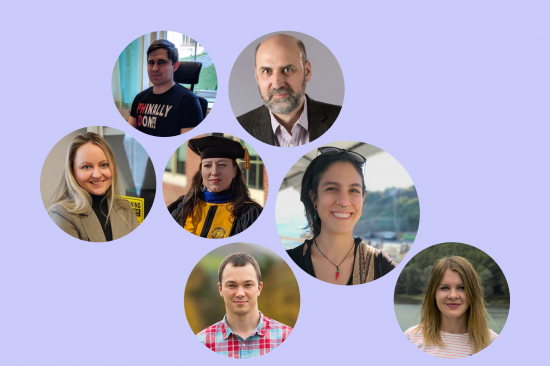
Meet this year’s MJJ Foundation Knowledge Scholarship laureates:
- Greta Zubytė will study the master’s program “Master of Counselling – Interpersonal Dialogue” at the University of Edinburgh. She chose this program to obtain a deep theoretical foundation combined with intensive practical experience, which will allow her to acquire a high-quality therapist qualification. This field is highly relevant to Lithuania—strengthening the psychological resilience of society and providing aid to people affected by war and crises. Read more about Greta’s story here (HYPERLINK TO THE ENGLISH VERSION OF THIS ARTICLE).
- Agnė Augustė Vėgėlytė will study a Master’s in Genomic Medicine at the University of Cambridge. This master’s degree combines genetic knowledge with its clinical application in medicine to diagnose and treat rare inherited disorders and diseases caused by changes in the genetic code. The program integrates knowledge of genetics, genomics, and bioinformatics, collaborating with the Cambridge Biomedical Campus, Wellcome Sanger Institute, and the NHS Genomic Medicine Service. Augustė is choosing this program aiming to acquire laboratory, bioinformatic, and ethical-legal skills needed to diagnose and treat rare hereditary diseases and translate genomic discoveries into clinical practice. This field is particularly relevant to Lithuania, as personalized diagnostics and treatment will contribute to medical progress and more effective disease management. This scholarship was granted in cooperation with the state study fund program “Kitas 100” (The Next 100). Read more about Augustė’s story here.
- Ieva Plungytė is studying a European College of Zoological Medicine (ECZM) Avian residency and is striving for the ECZM Avian Diplomate qualification—the highest professional level in the field of exotic (especially avian) veterinary medicine. There are almost no such specialists in Lithuania and neighboring countries, and the acquired qualification will allow her to provide high-quality treatment for complex cases and conduct scientific research. Read more about Ieva’s story here.
- Marius Danilevičius will study the “European Politics and Society” master’s program at the University of Oxford, continuing his research topics in political behavior analysis. He is choosing this program due to its strong quantitative methods and research infrastructure (Q-Step, experimental social sciences laboratory, Russian and Eastern European Studies Center), which are necessary to implement his planned statistical model regarding diaspora voter behavior. This research is important for Lithuania—better knowledge about the profile of emigrated voters will allow for the creation of more effective policy measures for diaspora engagement. Read more about Marius’s story here.
- Laura Blažytė will pursue her master’s studies at the famous Bartlett Faculty of the Built Environment (Architecture) at University College London, where she will delve into adaptive reuse, regenerative design, and complex spatial interaction strategies. She chose this program due to its strong research groups (e.g., BSA Sustainable Heritage and Circular Construction Lab) and practical opportunities to gain skills in the fields of material, structural, and urban reuse. This area is exceptionally relevant to Lithuania—the reuse of old buildings reduces emissions, conserves resources, promotes regional development, and improves public health and quality of life. Read more about Laura’s story here.
- Eglė Meškelytė will study in the international veterinary dentistry courses “Dentistry and Oral Surgery” in the United Kingdom. With more than 10 years of experience in small animal practice, she specializes in several areas and has recently been particularly interested in dentistry—a field that lacks highly qualified specialists in Lithuania. Eglė plans to apply the acquired theoretical and practical knowledge in the new first veterinary dentistry center in the Baltic States in Vilnius, providing advanced services to patients from Lithuania and neighboring countries, as well as passing on her experience to young veterinarians. Read more about Eglė’s story here.
By accepting the MJJ Foundation scholarship, the laureates commit to bringing their knowledge back to Lithuania after their studies. Let’s build Lithuania’s future together!






Partners of the MJJ foundation:




Let’s build Lithuania’s future together!